
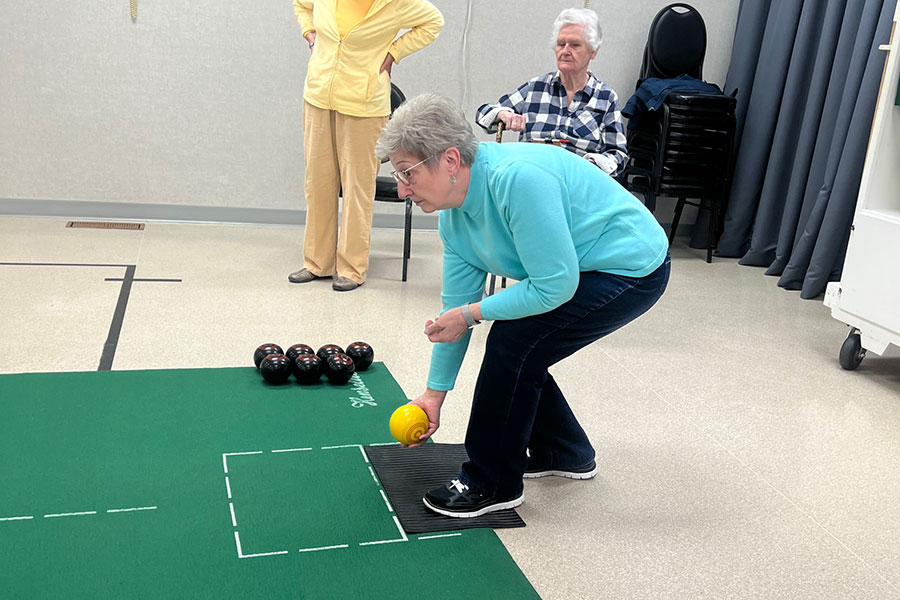
When rainy afternoons or hot summer days keep everyone indoors, finding a pastime that is both engaging and gentle on the joints can feel challenging. Carpet bowling answers that need beautifully, offering laughter, light movement, and friendly competition all in one roll of the bowl.
Because the game requires minimal equipment and virtually no setup time, it has become a staple in recreation rooms, church halls, and senior living communities across the country. More importantly, it’s an activity that leaves older adults feeling energized rather than exhausted.
Easy to Learn, Hard to Resist
Carpet bowling borrows the essential rules of traditional lawn bowls but simplifies them for indoor play. Players roll weighted rubber or plastic bowls along a felt mat, aiming to stop as close as possible to the small target ball—or “jack”—at the far end. Since the bowl’s slightly offset center of gravity causes a gentle curve, the real excitement lies in mastering the angle rather than power.
Most newcomers pick up the basics in under ten minutes, which removes the intimidation factor that can keep first‑timers on the sidelines. The low barrier to entry turns spectators into participants quickly, building confidence and encouraging repeat play.
Gentle Exercise with Big Benefits
Though it looks effortless, carpet bowling quietly strengthens the very muscles that support everyday mobility. The controlled bend to release the bowl works the quadriceps and glutes, while the follow‑through engages core and shoulder stabilizers. Because players alternate turns, the game naturally incorporates brief periods of rest, preventing overexertion.
Regular sessions improve balance and coordination—key components in fall prevention—without placing undue stress on hips or knees. For those managing arthritis or recovering from surgery, the sport provides a safe avenue to keep joints moving and circulation flowing, translating into better flexibility during daily tasks.
Encouraging Social Connections
Beyond physical perks, carpet bowling shines as a social catalyst. Games are typically played in pairs or small teams, fostering light‑hearted banter and cooperative strategy. The shared objective—edging bowls closer to the jack—creates an easy conversation starter, even for residents who normally shy away from group events.
Friendships deepen over rematches, and celebratory high‑fives boost mood‑elevating endorphins. Many recreation directors schedule weekly leagues or casual tournaments, which give participants something to anticipate and talk about between matches. In settings where loneliness can lurk, this steady social rhythm becomes just as important as the exercise itself.
Making the Game Fit Any Space
One of carpet bowling’s greatest advantages is its flexibility. The mat can be rolled out in a multi‑purpose hall, a wide corridor, or even a living‑room‑sized lounge, adapting to the dimensions available. Portable sets often include a carrying case, making them easy to store and quick to set up for impromptu play.
Creative coordinators sometimes add soft lighting, background music, or themed scorecards to freshen the experience and mark special occasions. Whether the space is modest or expansive, a few minor adjustments—like anchoring the mat with painter’s tape or arranging seating nearby—make the game accessible to players with walkers, canes, or wheelchairs.
Conclusion
Carpet bowling proves that indoor recreation for older adults need not be sedentary or solitary. By blending easy rules, low‑impact movement, and spirited camaraderie, it delivers a full spectrum of wellness benefits within an inclusive, adaptable format.
Setting up a lane takes minutes, yet the ripple effect on physical health, mental sharpness, and social well‑being can last long after the final score is tallied. Roll out the mat, gather a few friends, and watch a simple game transform an ordinary afternoon into a highlight of the week.

