
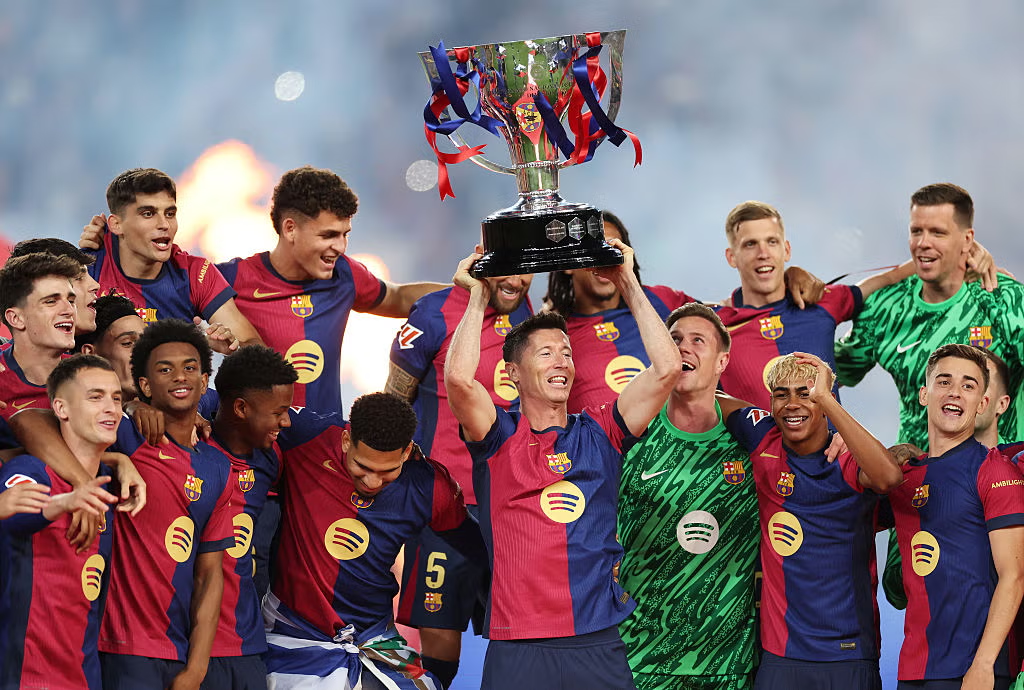
In La Liga, certain matchups repeatedly outperform betting expectations over short and medium-term periods. These games do not necessarily produce dominant scorelines, but they consistently avoid losing against the odds. Understanding why some fixtures remain reliable requires analyzing form trends, tactical matchups, and how bookmakers adjust expectations over time.
Why Recent Form Matters More Than Season Totals
Season-long statistics often mask short-term behavioral changes. Injuries, tactical adjustments, and fixture difficulty can significantly alter a team’s reliability against the odds within a limited window. Matchups that avoid losing the handicap recently usually reflect teams operating closer to their current performance ceiling rather than historical averages.
This is especially relevant in La Liga, where tactical conservatism and game management can change rapidly based on league position.
Tactical Matchups That Suppress Volatility
Certain pairings naturally reduce scoreline volatility. When both teams share similar defensive priorities or midfield control styles, the match outcome tends to stay within a narrow range. This makes it harder for odds expectations to be exceeded decisively in either direction.
These matchups often feature controlled tempo, limited transition phases, and cautious second-half approaches that stabilize results.
Market Adjustment Lag in Repeating Fixtures
Bookmakers adjust odds based on long-term reputation faster than short-term tactical shifts. When a team improves structurally without dramatic results, the market can lag behind actual performance. This creates a window where certain matchups repeatedly avoid losing the line.
To illustrate how this appears statistically, recent fixtures often show the following pattern.
| Indicator | Market Expectation | Actual Outcome Trend |
| Goal margin | 1+ goals | 0–1 goal |
| Possession gap | High | Moderate |
| Late-game pressure | One-sided | Balanced |
These gaps explain why the odds fail to reflect true match balance.
Defensive Consistency Over Attacking Output
Teams that frequently cover the handicap do not rely on scoring efficiency alone. Defensive consistency is the more reliable driver. By limiting high-quality chances, these teams reduce the probability of decisive defeats even when attacking output fluctuates.
This explains why low-scoring draws and narrow losses often still result in successful odds outcomes.
Recent Scheduling and Opponent Profiles
Fixture congestion and opponent rotation policies heavily influence short-term reliability. Matchups involving teams with similar rest cycles and squad depth tend to stabilize performance levels.
Common conditions that strengthen this effect include:
- Both teams playing midweek matches previously
- Limited squad rotation due to injuries
- Opponents prioritizing damage control over dominance
These factors compress performance differences and protect underdog lines.
In-Play Behavior and Second-Half Management
A key trait of matchups that rarely lose the odds is controlled second-half behavior. Teams slow tempo, reduce pressing height, and prioritize shape once the scoreline meets minimum objectives. This approach directly counters late-game volatility, which is often the biggest threat to covering the handicap.
Comparing Controlled vs Uncontrolled Matchups
Controlled matchups show fewer high-speed transitions and a lower frequency of box entries after the 60th minute, while uncontrolled games experience increasing shot volume and defensive breakdowns.
Analytical Value and Odds Interpretation
From an analytical standpoint, recognizing these patterns helps explain why some La Liga fixtures remain profitable to follow. On platforms such as ufabet168, odds movement in these matchups often shows limited drift even after early goals, reflecting confidence that the game state will stabilize rather than escalate. This behavior aligns with historical data showing that these fixtures rarely exceed expected margins despite changes in score.
Risk Factors That Can Break the Pattern
No trend is permanent. Red cards, early penalties, or unexpected tactical shifts can quickly invalidate recent reliability. Teams forced to chase points late in the season may abandon conservative approaches, increasing variance and breaking the pattern of consistent odds performance.
Monitoring motivation and table pressure is essential to avoid misreading stability as inevitability.
Summary
La Liga matchups that rarely lose the odds in recent form share identifiable characteristics rather than relying on coincidence. Tactical compatibility, defensive consistency, controlled second-half behavior, and market adjustment lag all contribute to short-term reliability. These factors explain why certain fixtures continue to outperform expectations until structural or contextual changes disrupt the balance.

