
One device. Dozens of uses.
It’s easy to think of two-way radios as tools for security guards or event crews—but that barely scratches the surface. In truth, they’ve quietly become a secret weapon for smoother coordination in some of the most common—and chaotic—scenarios life throws at us.
From keeping your family connected on vacation to managing foot traffic at a busy event, two-way radios bring something most tech doesn’t: reliability, immediacy, and simplicity. No signal? No problem. No app? Doesn’t matter.
Let’s explore how these classic communication tools continue to earn their place—one push-to-talk moment at a time.
Road Trips: Convoy Coordination Made Easy
Ever tried to coordinate two cars on a long road trip using text messages? Delayed responses, missed exits, and the occasional “Wait, where are you?”—it’s a recipe for frustration.
With two-way radios, everyone’s in sync. One driver radios: “Next stop—15 minutes.” Everyone hears it, instantly. No dropped calls. No fumbling with phones.
And for families traveling in separate vehicles, it’s a game-changer. Radios keep everyone connected without relying on spotty cell service, especially in rural areas or mountain highways.
Camping and Outdoor Adventures
Nature’s great. Until your phone loses signal and your kids disappear into the woods looking for frogs.
Whether you’re hiking, setting up camp, or splitting off for different activities, two-way radios offer peace of mind when phones can’t. You don’t need a data plan to check in with someone on the other side of the lake.
And unlike smartphones, radios don’t mind a little dirt, rain, or rough handling.
Bonus: kids love using them. There’s something about pressing a button and hearing a voice come through that still feels a little magical.
Theme Parks and Large Venues
If you’ve ever tried to wrangle a group of people at a massive theme park, you know the drill: half the crew wants to ride the roller coaster, the other half is stuck in line for popcorn, and someone’s missing altogether.
Two-way radios eliminate the group-text chaos. Just press and talk: “Meet at the fountain at 2.” No lost messages. No screen-glued teenagers pretending they didn’t see your text.
They’re especially handy for youth groups, school trips, or extended families trying to survive a weekend at Disneyland.
Event Management and Crowd Control
Now let’s scale things up.
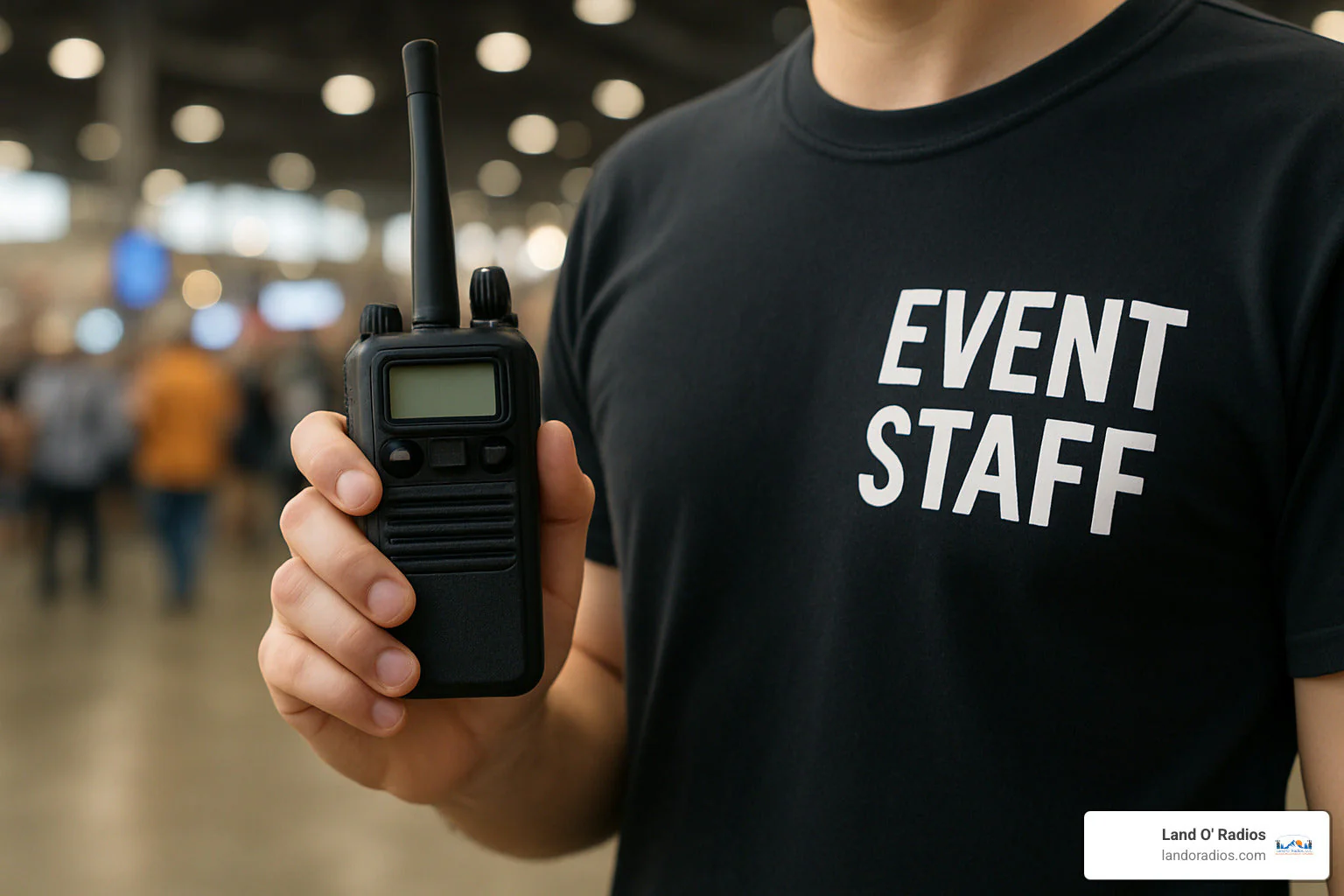
For event staff, volunteer teams, or security crews managing large crowds, two-way radios are essential. Communication needs to be fast, constant, and clear. You can’t afford to dig through apps or wait on a callback during a live incident.
From coordinating entrances and managing lines to rerouting foot traffic and dispatching help, radios keep everyone in sync without relying on cell service—something that often buckles under the weight of high-attendance events.
The ability to speak to individuals or entire teams with the push of a button? That’s logistics gold.
Around the House or Neighborhood
You don’t need to leave town to find a use for radios.
Families with large homes or properties use them for everything from calling kids in for dinner to coordinating yard work or checking in from the garage. Neighborhood watch groups use them to report suspicious activity in real time.
It’s an easy way to keep communication lines open without giving everyone another app to manage or number to remember.
Long-Range Options? Yep, That Too
Modern radios have come a long way. Some now connect to nationwide LTE networks—so even if your team or family is spread out across different cities or states, you can still communicate in real time.
Whether you’re managing an event, planning a cross-country trip, or keeping in touch with family in different regions, long-range radios make it possible—without relying on traditional cell service.
Final Thought: One Tool, Many Roles
Two-way radios aren’t just for emergencies or professional use. They’re built for life’s unpredictable moments—big and small.
From camping trips to concert gates, family reunions to home projects, these devices offer what most communication tools lack: instant, direct connection with no fluff and no lag.
So whether you’re organizing a crowd or just trying to keep your crew together in a crowd, remember: sometimes, the best solution doesn’t need a touchscreen—it just needs a button.

